The gin guide
Pick your gin by name or by photographing the label, and get its signature serve, other drinks to make with it, and a shopping list.
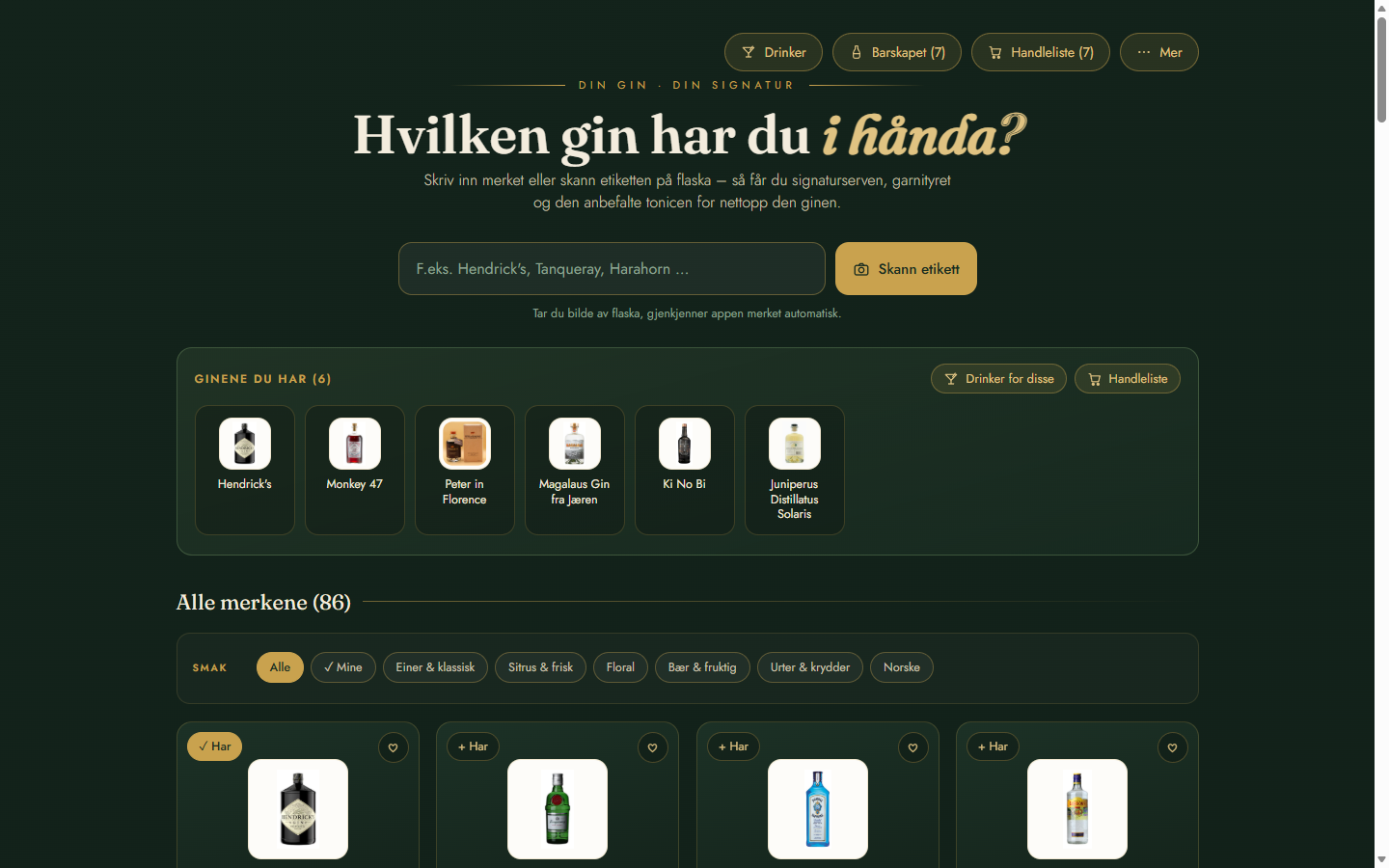
The gin guide's front page on 3 October 2026. Nothing is blurred: it shows gin brands and the app's own text.
What it is
The gin guide is a small phone app for people who like gin. You pick your bottle, either by typing the name or by taking a photo of the label, and you get its signature serve: glass, ice, garnish, tonic and steps, drawn as a little illustrated drink. Below that are other drinks the gin works in, gins with a similar flavour, and a shopping list for everything you would need.
You can mark which gins you own and what else is in your drinks cabinet, and the app shows which drinks you can make right now and which single bottle would unlock the most new ones.
How it works
The front end is React; a small Express server serves it and the few API calls. The brand data is a hand-curated file, not a database.
Label scanning runs on a vision model on the same machine, not in the cloud. It is not asked to read the label freely. It gets the list of brands the app knows and must choose one of them or say unknown. When a gin is missing, the app can propose a new entry with a bottle photo, a serve found on the web and suggested details, and nothing is saved until a person has checked it.
Most of the content work was research rather than code. Serves were checked against producers’ own pages, and candidates that turned out not to be real gins were dropped. Minor dependency updates are merged automatically when the build passes.
What we expected, and what happened
Read it like a code review. Each removed line is something we expected, from a plan, a spec, a README or a code comment. The added line under it is what the history shows actually happened.
Expected: The README says label scanning sends the photo to Claude and needs a cloud API key.
Happened: The first commit already used a local vision model, and that is still the default. The model gets the list of known brands and must pick one or answer unknown, which proved sturdier than reading free text. The README was never updated.
Expected: Each brand page shows the brand's own signature serve.
Happened: An audit on 3 July checked the serves against the producers' official ones and corrected ten of them: wrong garnish, wrong mixer or wrong ratio.
Expected: A web search service would be the main source for each gin's serve.
Happened: For the original brands it gave wrong amounts or lost detail, so those hand-written serves were kept. For variants without a serve it found one for 30 of 37.
Expected: The README promises other ways to enjoy each gin.
Happened: On 9 August, 71 of the 86 brands had no alternative drinks at all. A shared library of classics, matched on each gin's flavour profile, now gives every brand six.
Expected: The shopping list merges the ingredients of the drinks you can make.
Happened: Its ingredient matching had real errors: elderflower and cherry liqueur both became blackberry liqueur, and a teaspoon of orange marmalade became an orange. Found and fixed on 9 August, when a home bar feature came to depend on it.